Bodily Autonomy
Concept
Bodily Autonomy is an interactive multimedia installation exploring ethical dilemmas surrounding reproductive rights, medical authority, and personal choice. Inspired by ongoing political debates around abortion rights and the restriction of women's bodily autonomy, the project examines what happens when decisions about one's own body are placed into the hands of others.
The installation was designed for a public exhibition and intentionally brings together strangers who would not normally interact with one another. By assigning participants different social roles within emotionally charged medical scenarios, the project encourages discussion, disagreement, and moral conflict.
The work highlights how bodily autonomy can become compromised by societal expectations, cultural influences, family pressure, and institutional authority. The project ultimately became less about the physical installation itself and more about the conversations and arguments that emerged from it, the discussions generated between participants were considered the true outcome.
↓ Read the paper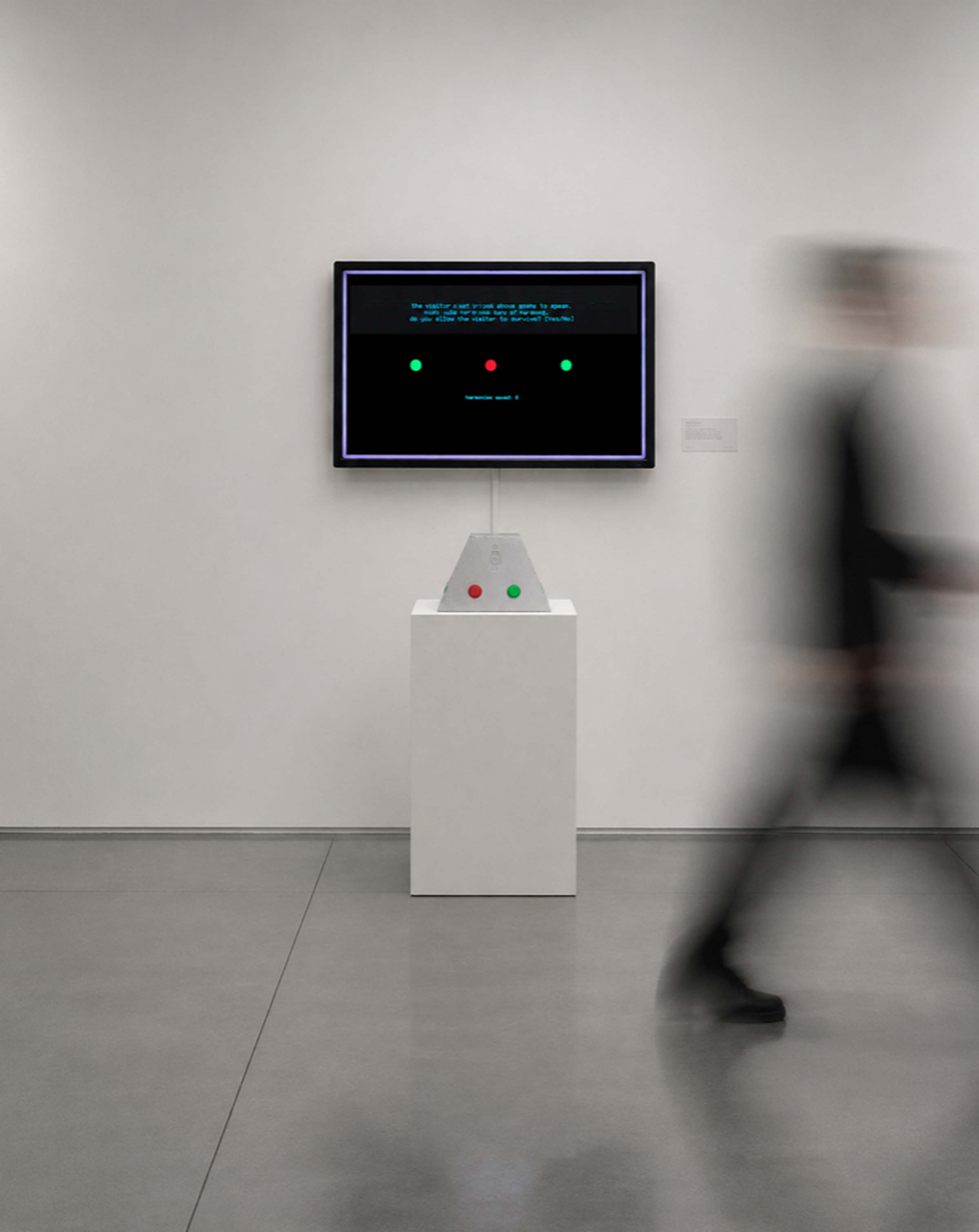
How It Works
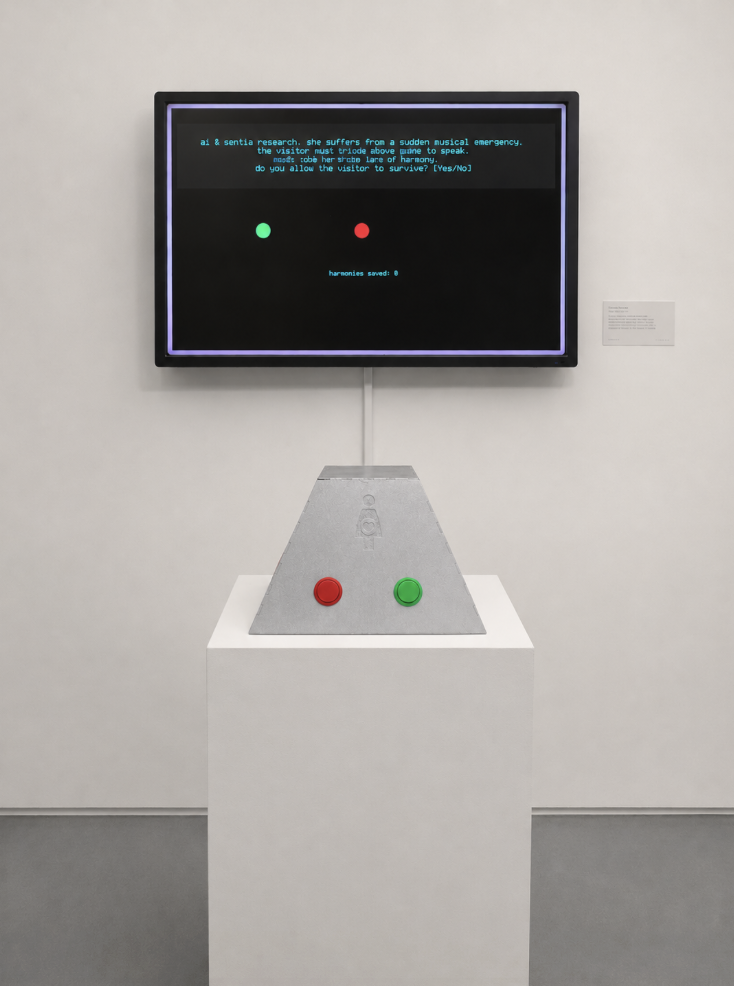
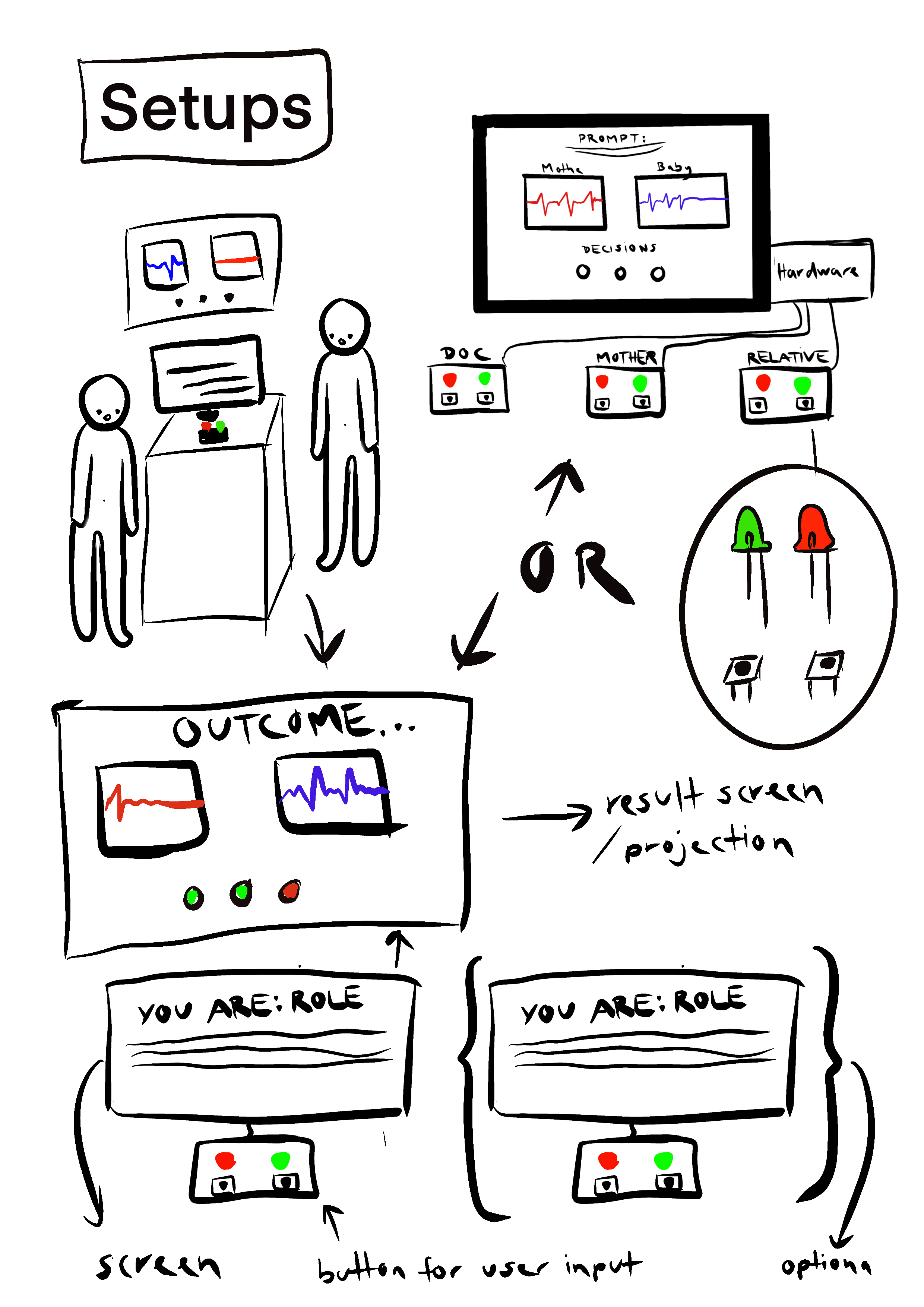
The installation requires three participants. Each person stands at a designated station equipped with two buttons: a green button for "yes" and a red button for "no." Every participant receives a different role, a family member, a pregnant woman, and a doctor.
The central screen guides participants through three different medical scenarios, each presenting contextual information and ethical dilemmas related to bodily autonomy and reproductive decisions. Participants can discuss the situation together before individually submitting their answers. The system visually displays incoming responses in real time through coloured indicators.

After the final round, the installation displays the consequences of the collective decisions. Depending on the outcome, either the mother's or the baby's medical monitor slowly flatlines, communicating life and death symbolically through abstract medical visuals, intentionally chosen over graphic imagery to remain accessible to younger museum visitors.
Planning
The project began with research into abortion rights, medical ethics, and the political debate surrounding bodily autonomy. From this, the central idea emerged: an installation that forces participants to collectively make decisions about another person's body.
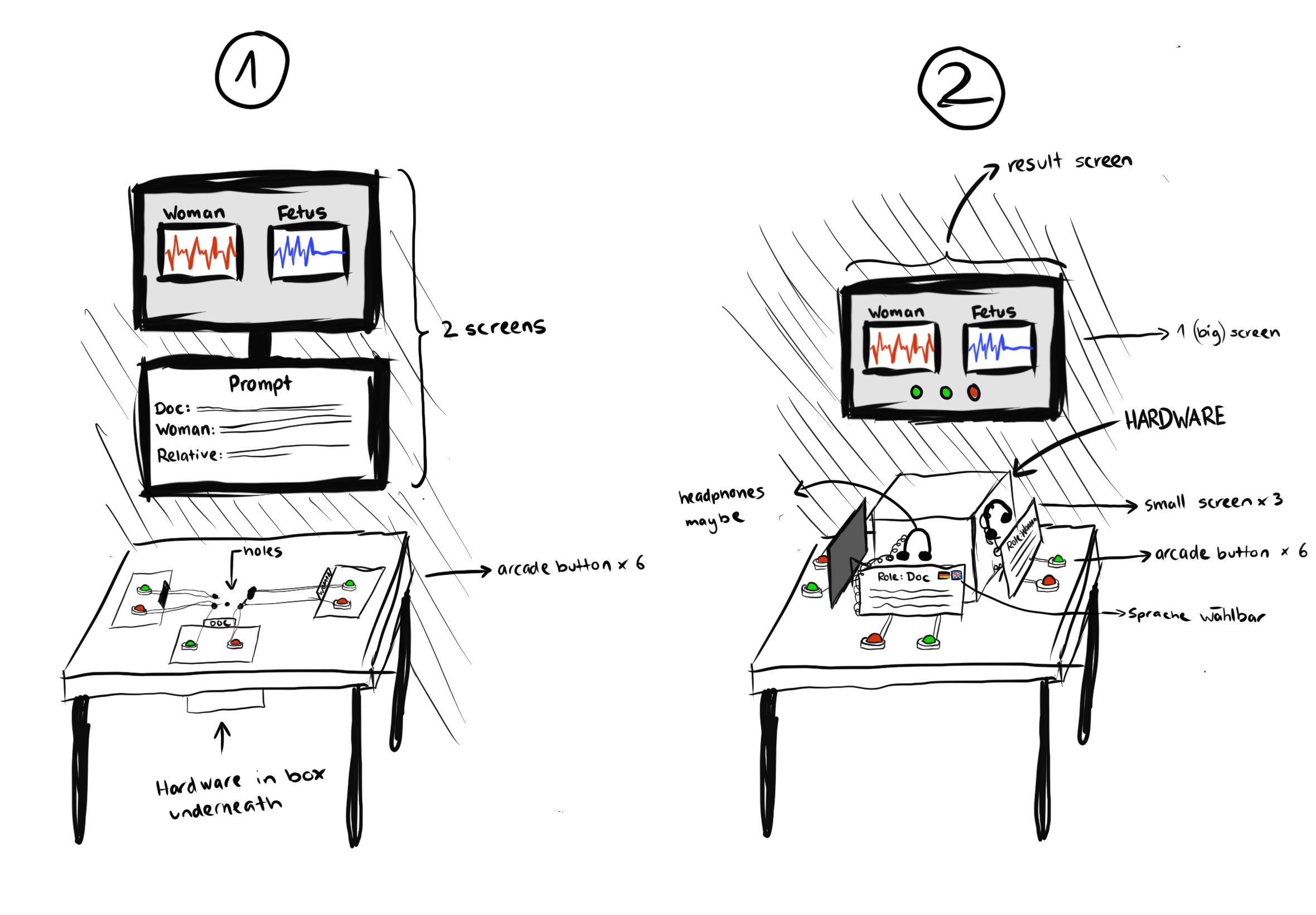
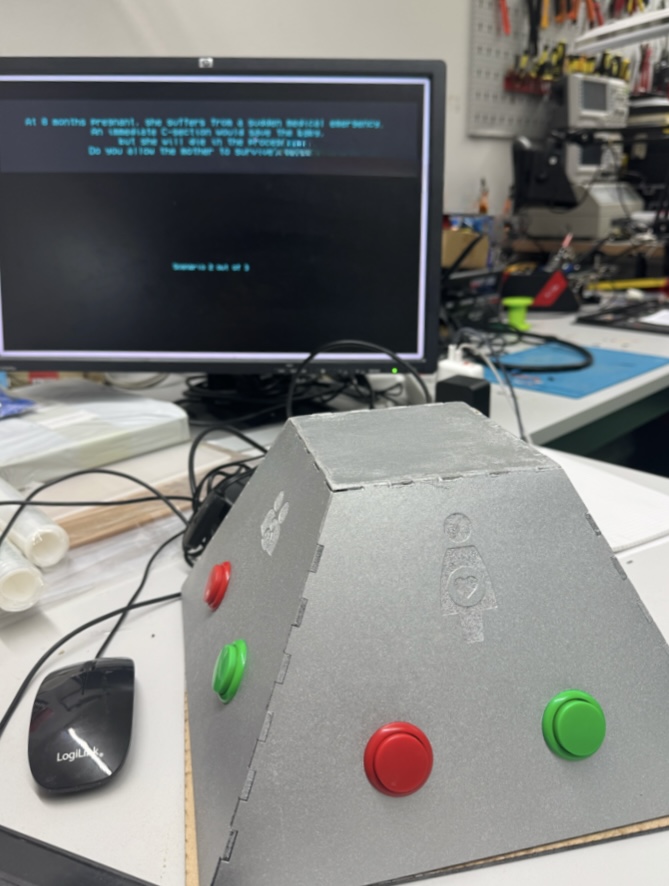
Different interaction formats and layouts were explored through sketches and prototypes. The final station-based setup was selected because it balanced technical simplicity, production costs, and clarity of interaction. The visual design was intentionally inspired by medical environments, clinical typography, silver-painted surfaces, and monitor-style visuals were chosen to create a sterile atmosphere resembling hospital equipment.
Scenarios were carefully written to include different cultural, ethical, and medical contexts, allowing participants to experience a wider range of perspectives and preventing the installation from reducing the issue to a single viewpoint.
Process + Challenges
The development process involved both technical experimentation and physical prototyping. One of the main challenges was creating a meaningful three-person interaction using only one shared screen while keeping the interface understandable and engaging.
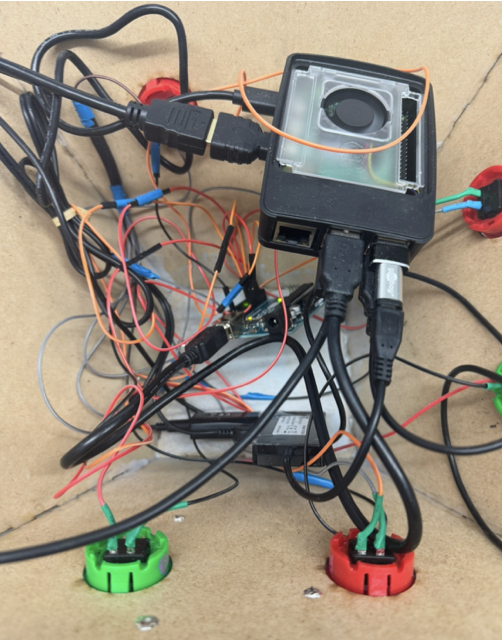
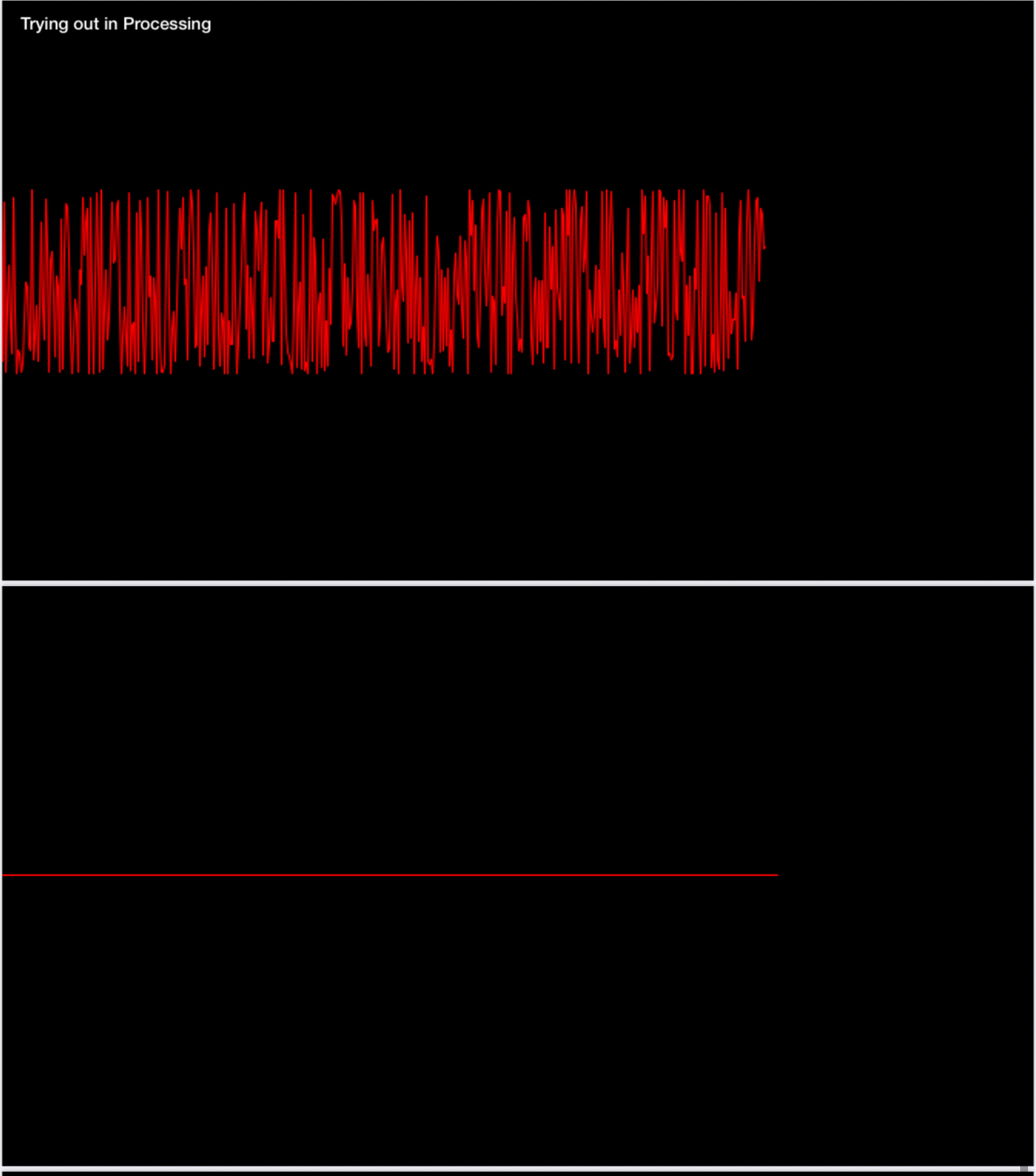
Building the installation required working with a Raspberry Pi, physical buttons, soldering, coding the monitor animations, and laser-cutting the structure. Many technical elements required repeated testing and troubleshooting before functioning reliably. The laser-cut housing also needed several iterations before all edges fit together correctly.
Despite the technical limitations and limited resources, these challenges became an important learning experience, strengthening my understanding of physical computing, interaction design, and installation building.
Expansion
The installation's core tension, that bodily decisions are made collectively even when they shouldn't be, could scale in several directions. A VR version would place each participant inside a first-person embodiment of their assigned role, making the abstraction physical: you don't just press a button as "the doctor," you inhabit that perspective spatially, with everything that implies.
Biometric integration is an obvious next layer. Heart rate monitors, galvanic skin response sensors, or breathing data displayed on screen in real time would make the stress of decision-making legible to everyone in the room, including the person making it. The installation would show not just what people decide but what deciding costs them.
A networked version connecting participants in different cities, strangers who share a language barrier and a dilemma but nothing else, would strip away the social friction-reduction that comes from being in the same room. It would also open the work to documentation: patterns across hundreds of sessions, which roles tend to vote which way, whether cultural context shifts outcomes in measurable directions.
The scenario format could expand beyond reproductive rights into other zones where bodily autonomy is legally or institutionally contested: end-of-life decisions, psychiatric holds, organ donation, disability and medical authority. The same three-person structure, the same buttons, different stakes.
Conclusion
Bodily Autonomy successfully created an emotionally charged and discussion-driven experience that encouraged visitors to reflect on ethical decision-making and reproductive rights. The installation generated strong reactions, with some viewers describing it as harsh or uncomfortable, while others recognised it as a reflection of real situations experienced by women around the world.
The most valuable outcome was the discourse it created between participants. The installation acted as a catalyst for debate, forcing people to confront their own beliefs and question the ethics of collective control over individual autonomy.
In the future, the concept could be expanded through VR, biometric sensors, or more advanced interactive systems, allowing for deeper emotional engagement and further exploration of the psychological impact of decision-making, responsibility, and bodily autonomy.